
Night Boating Safety Tips
Boating at night can be a serene and even magical experience that allows you to enjoy the peace of the open water under a starry sky. However, as enticing as a moonlit ocean adventure can be, you need to take special precautions when out on the water after dark. Reduced visibility means you must be prepared before you set sail, and knowing how to use boat lights at night correctly makes all the difference. With the proper knowledge and preparation, you can ensure your safety during your next nighttime excursion. To help things go smoothly, keep reading for our top tips for boating safely after sunset.
What Makes Night Boating Different
Before you start planning your first nighttime excursion, it helps to understand what makes night boating different and why it comes with added risks. Similarly to driving a car at night, visibility on the water drops sharply after sunset. Yet, unlike cars, boats don’t have streetlights to guide their path. Heightened awareness becomes key, since it’s harder to spot hazards, floating debris, or even channel markers.
During the day, you might see a channel marker from half a mile away, but at night, you may only spot it from a hundred yards. Because of this, your ears become just as valuable as your eyes. Avoid playing loud music—sound helps you detect nearby boats, buoys, and fog horns before you see them.
Make Sure You Have The Proper Safety Equipment Before You Set Sail
Before setting sail on a nighttime voyage, double-check that your boat’s lights are working properly and that you have all the necessary safety gear. You’ll want to have:
- Life jackets for everyone on board.
- Flashlights and headlamps with fresh batteries.
- Charts and GPS devices for navigation.
- Emergency equipment like flares, whistles, and a marine radio.
- A fully stocked first-aid kit.
- Sound-producing devices like horns or whistles.
- And extra batteries for your electronics.
Having the right equipment on board helps you respond quickly and stay steady if an emergency arises while boating at night.
Plan Your Route and Check The Weather
After dark, route planning carries more weight because familiar water can feel unfamiliar fast. Landmarks fade, distances are harder to judge, and it’s easier to drift off course without noticing. Map your route before you leave, then mark GPS waypoints for key turns, channel entrances, bridges, sandbars, and your return path. If you’re using charts, review them ahead of time so you’re not trying to interpret details while underway.
For your first few trips, stick to waters you already know and choose a simple path with fewer tight turns. Staying closer to shore can also help you stay oriented, as long as you’re clear on shallow areas and local hazards. Give yourself extra buffer time and aim to run the route at a slower pace than you would during the day so you have more room to react.
Weather and tides also deserve a careful look before you head out. Check forecasts for wind shifts, fog, visibility changes, and storm timing, along with tide tables and current conditions for the window you’ll be on the water. If the forecast looks unstable, it’s better to shorten the trip or reschedule than to deal with rough water in low visibility.
Before you depart, share your plan with someone on shore. Tell them where you’re launching, your intended route, who’s onboard, and when you expect to return. That way, if you’re delayed or something goes wrong, someone has enough detail to provide help in the right direction.
Use Proper Boat Lights at Night
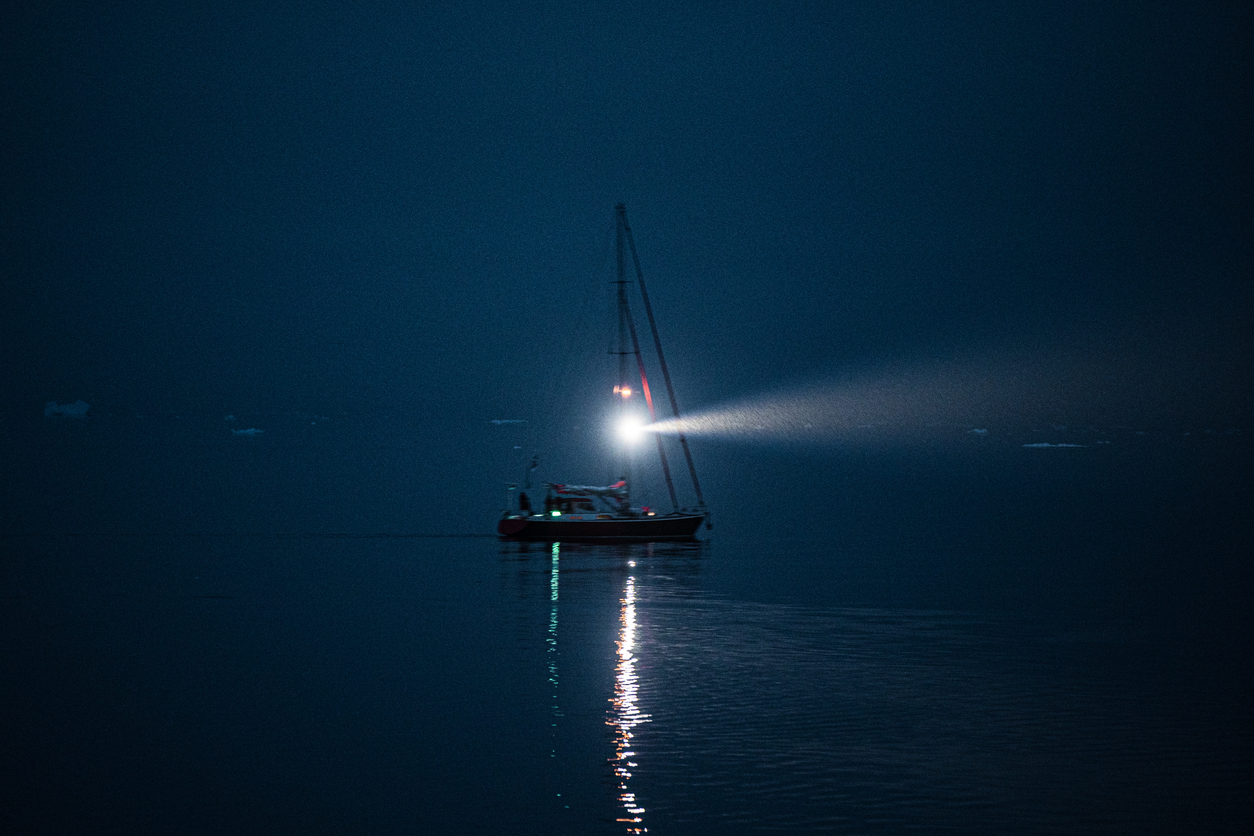
Using the correct boat lights at night is one of the best ways to stay safe and visible. Avoid using bright headlights; their glare can bounce off the water and hurt your visibility. Instead, rely on your navigation lights:
- Port (left) side shows a red light
- Starboard (right) side shows green
- Stern (rear) displays white
These lights help other boaters gauge your direction and right-of-way. Test your lighting before you head out. If you need more illumination on deck, use a flashlight with a red filter to preserve your night vision.
Don’t Go Alone
Given the safety risks, boating after dark is best done with company, particularly if it’s your first time sailing at night. Bring a companion who can help navigate and serve as a lookout while you focus on steering and staying on course. A second set of eyes helps spot channel markers, floating debris, and approaching vessels sooner, especially when visibility drops and distances feel harder to judge.
Having someone onboard also helps with quick tasks that can pull your attention away, like checking a chart, adjusting instruments, or grabbing a flashlight. If something unexpected happens, your companion can handle the radio, help prepare safety gear, or assist with docking. It’s a simple way to stay more aware, reduce fatigue, and make the whole trip run smoother.
Slow Down and Enjoy the Night
While speeding across the water might sound exciting, it can be risky when visibility is limited. Travel at a controlled pace, especially near the shore or in unfamiliar areas. Taking it slow helps you respond to unexpected changes or obstacles in time.
Need a Place to Dock? Consider Choosing Trident Marine Group
Boating after dark can be one of the most rewarding ways to experience the water. With good preparation, clear planning, and the right use of boat lights at night, your night cruise can feel peaceful and secure.
Of course, after a long day and night out on the water, you’ll need somewhere convenient to dock your boat. If you need boat slips near Annapolis, consider docking your boat at one of the marinas by Trident Marine Group. Our best-in-class marinas provide the perfect place to relax after a long day on the water, offering all of the amenities you could hope for, including wi-fi, shore power, and water at every slip, as well as clubhouses, private showers, and comprehensive concierge services. Feel free to contact us today to learn more about year-round docking and storage options.